A $45 fix that takes two minutes to install can stop most fuel thieves in their tracks. Here's what's available and what actually works
With fuel prices where they are and opportunistic crime surging, boat fuel theft has become a real problem. Your rig sitting in the driveway with a full tank is an easy target; someone with a length of hose and a jerry can help themselves in minutes.
The good news? The fix is cheap and fast. Simple anti-siphon devices that drop into your filler hose cost under $50 and install in the time it takes to read this article. They won't stop a determined criminal, but they'll send the opportunists looking for an easier mark.
The risk depends on where your boat lives
Trailer boats in driveways and yards
This is likely to be ground zero for fuel theft. Police data obtained by Boating New Zealand in 2025 shows most general marine thefts involve trailerable boats on private properties, with recovery rates sitting around 14%. Fuel theft was low but is likely to rise.
Vessels on marina berths
While marina berths offer better security - locked gates, lighting, CCTV - fuel theft from marina-berthed vessels is still a possibility for an opportunist. If your vessel is on a swing mooring or river berth with open access, the risk profile is considerably further elevated.
The determined thief versus the opportunist
A determined thief will always find a way. One story doing the rounds: thieves broke into a locked shed, disconnected the fuel line from the motor, ripped out the ball valve, and used the tank's own line to drain it. The owner discovered the problem 50 metres after leaving the ramp.
But that level of commitment is rare. Most fuel thieves want a quick hit they can drain in minutes without tools. Stopping them easily inserting a hose into your tank may be the time delay it takes to move them on to an easier target.
Anti-siphon devices: the simple solution
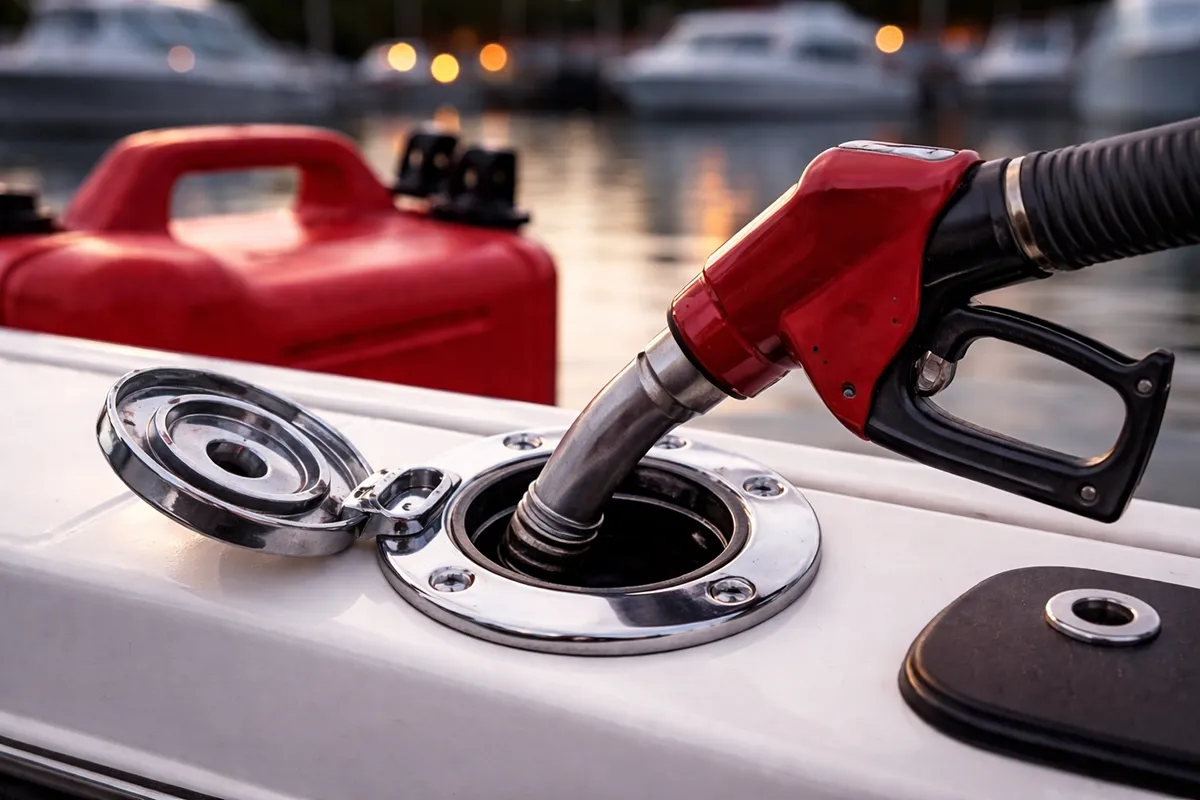
The most practical defence for trailer boat owners is an anti-siphon insert that drops into your fuel filler hose, making it difficult to thread a siphon down into your tank while still allowing normal fill-ups.
VETUS FUELSAFE
Price: ~$45 NZD
Stockists: Marine Deals, Boating and Outdoors, Boat City, Sea Marine, Master Tech Marine, All Marine, Mercury Bay Marine
This is the quickest options for most owners. A simple drop-in device made from petrol and diesel-resistant synthetic material, fitting 38mm and 51mm internal hose diameters. No tools; push it into your filler hose and you're done. Two minutes.
The device's shape prevents siphon hose insertion while allowing fuel to flow around it during fill-ups.
Links:
Perko Fuel System Locking Insert
Price: ~$100 NZD
Stockists: Marine Deals
A slightly different approach. As one reviewer put it: "It doesn't really look like it would work, but it does. It jams itself into the fuel fill, giving it the ability to breathe while making it hard to get a hose of any kind in there."
Comes with a dual-purpose key for both fill cap and locking insert. Polymer body with zinc alloy lock cylinder fits most standard vented fills.
Caveat: Some US reviews report the key mechanism loosening over time. Test properly and check periodically.
Links:
Locking fuel caps
For boats with standard deck fills, a locking cap replacement requires a key to open. Perko makes keyed versions, though you'll need to match your existing deck fill fitting.
The limitation: a locking cap protects the entry point but doesn't prevent destructive access or via fuel lines or breathers. One layer of protection, not a complete solution.
The bottom line
For around $45 and two minutes, a VETUS FUELSAFE or similar insert stops the vast majority of opportunistic fuel theft. It won't stop a determined criminal, but it makes your boat less attractive than the one without protection.
Think of it like locking your car; not about making theft impossible, just harder than the next car down the street.
Important!
Fuel systems are safety-critical. Always follow manufacturer installation instructions precisely, and use a qualified marine technician for any work that requires one. If you're modifying fuel lines, fittings, or tank connections, check with your marine surveyor or insurer first; incorrect installation can void your coverage and create serious fire risk.