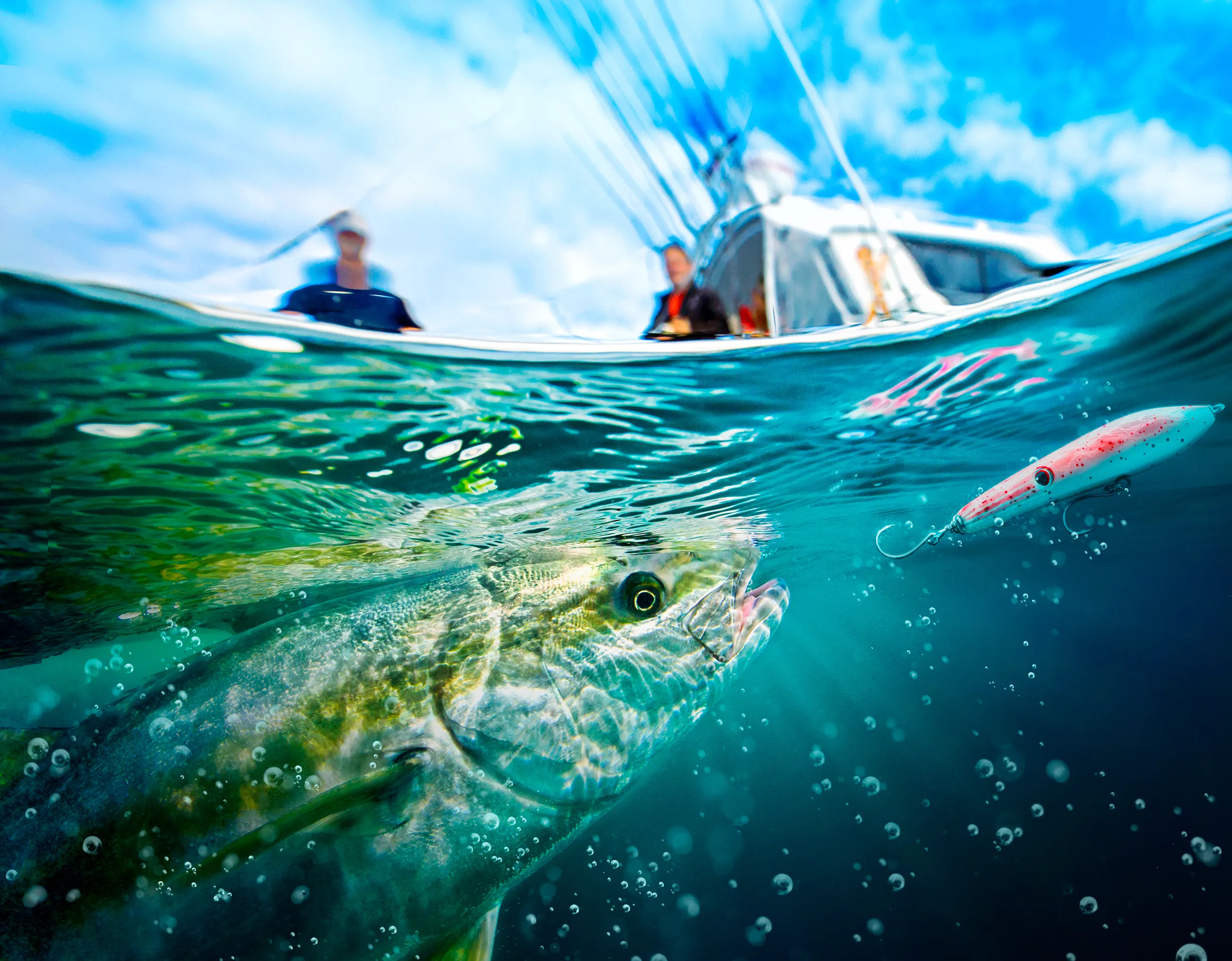
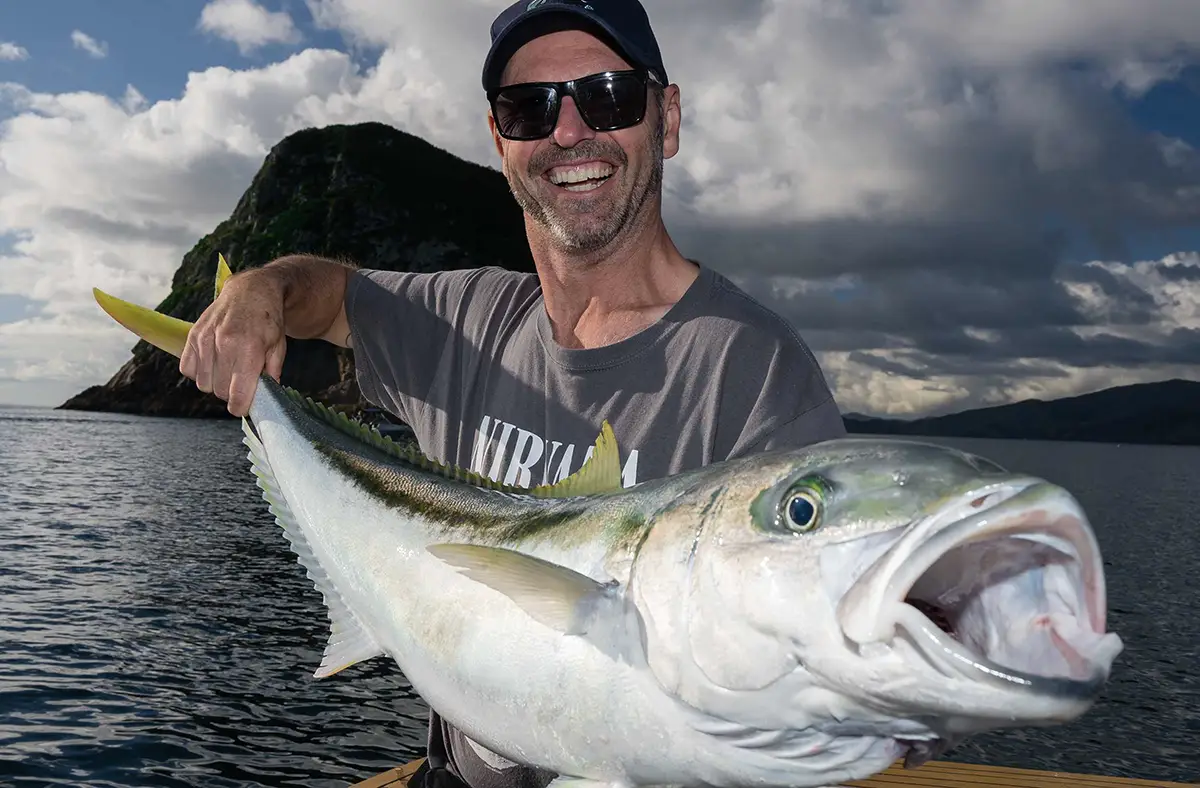
Trevally are one of the hardest fighting sport fish New Zealand has to offer and first-class sashimi, yet they are surprisingly under-rated by many fishos. It may sound mad to many, but a lot of fishermen still see trevally as nothing more than fresh bait.
Vibrant green and silver markings and a rather unusual shape make trevally one of the most instantly recognisable species in New Zealand waters.
However, relatively little is known about them when compared to our other table fish.
A deep body and large, powerful fins make trevally a combative species to catch on rod and line. Not only that, trevally are a diverse eating fish. The flesh is firm and reasonably strong in taste making it great for cooking and to eat raw as sashimi. Indeed, many chefs consider trevally the best fish to use for sashimi - see prep notes later in the piece.
Trevally are a slow-growing species and some fish may exceed 45 years of age.
Fish in excess of 9kg have been caught on rod and line but the average weight would be around the 1kg to 2kg mark. It is believed that trevally spawn in the summer and it is likely that they will spawn more than once.
Habitat and movement
Trevally usually prey on smaller fish and feed on plankton. They can be found in a wide range of areas from rocky shores to weed lines and in the open water. Smaller fish tend to form large schools.
However, larger fish are usually more solitary. One curious point about trevally movement is they can often be found schooling with other species such as snapper.
They can often be seen hanging back in schools, possibly scavenging on leftovers.
Trevally are common around much of the North Island and northern half of the South Island but can sometimes be caught as far south as Otago during the summer.
Younger fish will tend to stay closer to the seabed on reef areas but adult fish take to the open ocean and can be abundant at depths of 80 metres and even deeper.
Trevally also tend to hang out in areas with strong current and lots of foul. Despite their tendency to congregate around reefs and pinnacles, they will also, at times, work on the surface and can often be seen feeding in work-ups with other species like kahawai.
Best methods
It’s fair to say that the majority of trevally caught are as bycatch when targeting more supposed desirable species, namely snapper.
However, they are a reasonably easy species to target with shellfish and small cut baits on ledger rigs being a particular favourite. Hook sizes of around 5/0 work best. It’s also not uncommon for them to take a softbait or jig. One of the biggest challenges to landing trevally is their small, soft mouth, which makes it easy for hooks to pull through. Larger trevally are often lost just before landing as the stress of the fight tears the mouth.

Trevally sashimi
Trevally is genuinely first-class sashimi material. The firm, clean flesh holds its texture well when sliced, and the flavour is rich enough to stand on its own without being overpowering.
To prep: bleed the fish immediately on capture, then ice it down fast. Fresh is everything with sashimi. Once home, fillet and skin the fish, remove the bloodline, and pat dry. Slice across the grain into pieces around 5mm thick using a sharp, single-stroke cut.
Serve with soy sauce, fresh wasabi, and thinly sliced pickled ginger. A squeeze of yuzu or lemon cuts through the richness nicely. Keeps in the fridge for 24 hours, tightly wrapped.
Catch regulations
The daily bag limit for trevally is 20 (as part of the combined finfish daily bag limit of 20) in the Auckland and Kermadec region with a minimum length of 25cm. Regulations vary for other areas. Check local laws with the Ministry for Primary Industries (MPI) before you target trevally.