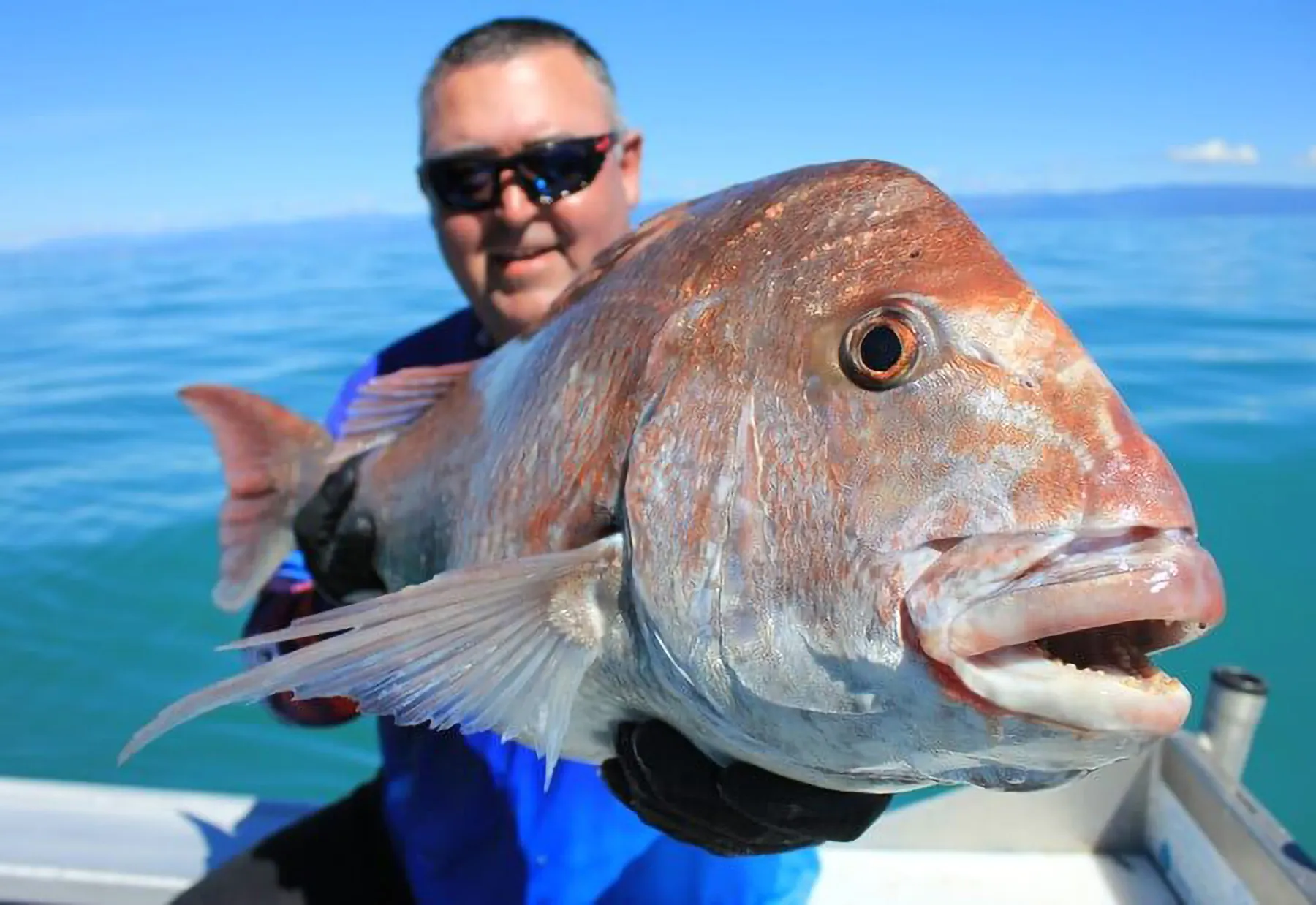
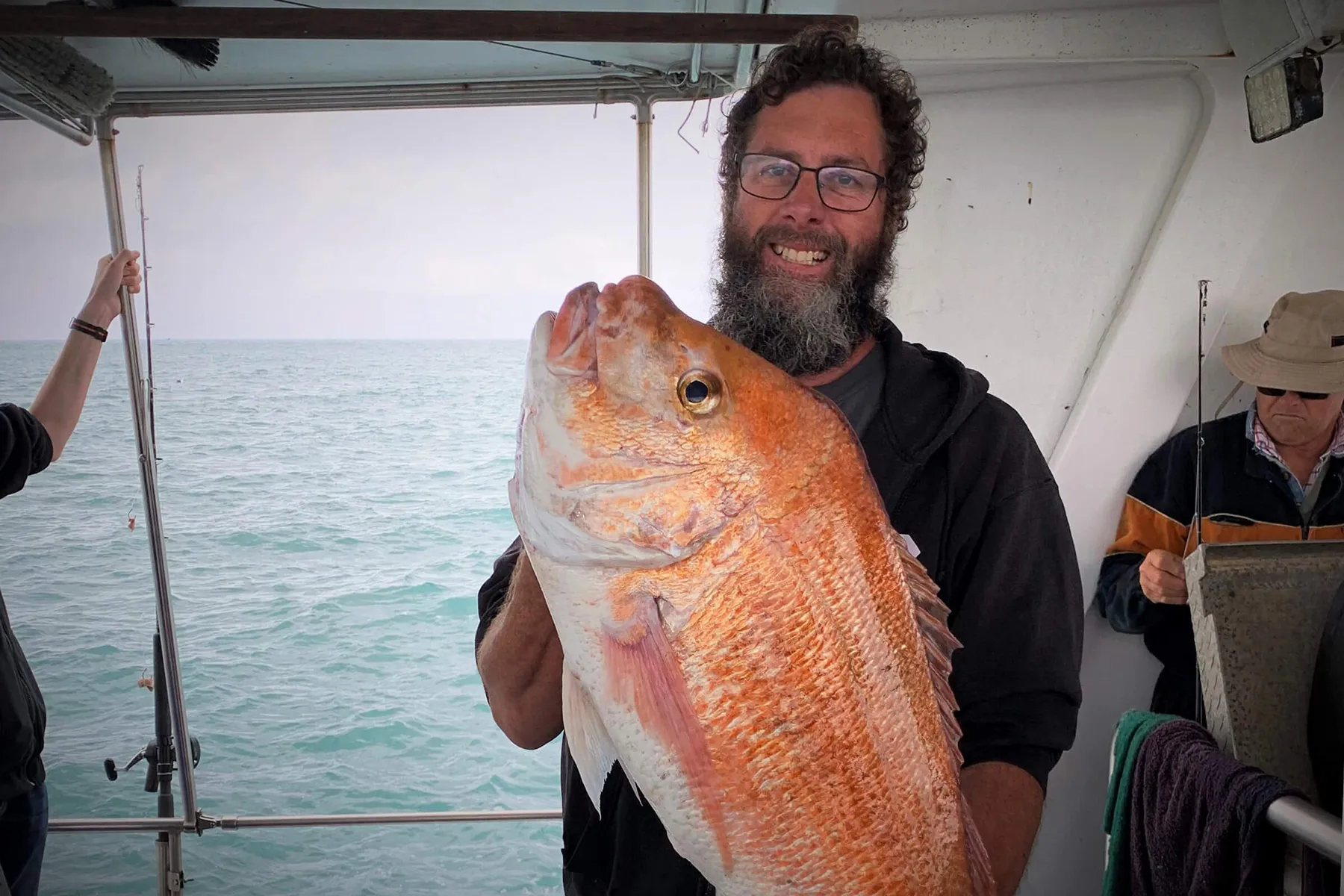
Due to its unique environment and lack of fishing pressure, the far north is home to some monster fish. Here's a quick guide to some of the spots that have been productive for me during more than 35 years of intensive fishing along the Northland coastline.
Editor's note
This piece is a refreshed version of a long-running guide from our archives. The focus is on the rock fishing, surfcasting and small-craft spots that the average angler can actually get to, no offshore campaign required.
Regulations have changed since this was first written. Bag limits, size limits and area closures are reviewed regularly by the Ministry for Primary Industries (MPI), and several rāhui (customary closures) and 186A temporary closures are currently in place across the Far North. The angler is responsible for knowing the rules that apply on the day, in the location, and for the species being targeted. Always check before you fish. A current rules summary and links sit at the foot of this post.
Due to its unique environment and lack of fishing pressure, the Far North is home to some monster fish. Here's a quick guide to some of the spots that have been productive for me during more than 35 years of intensive fishing along the Northland coastline.
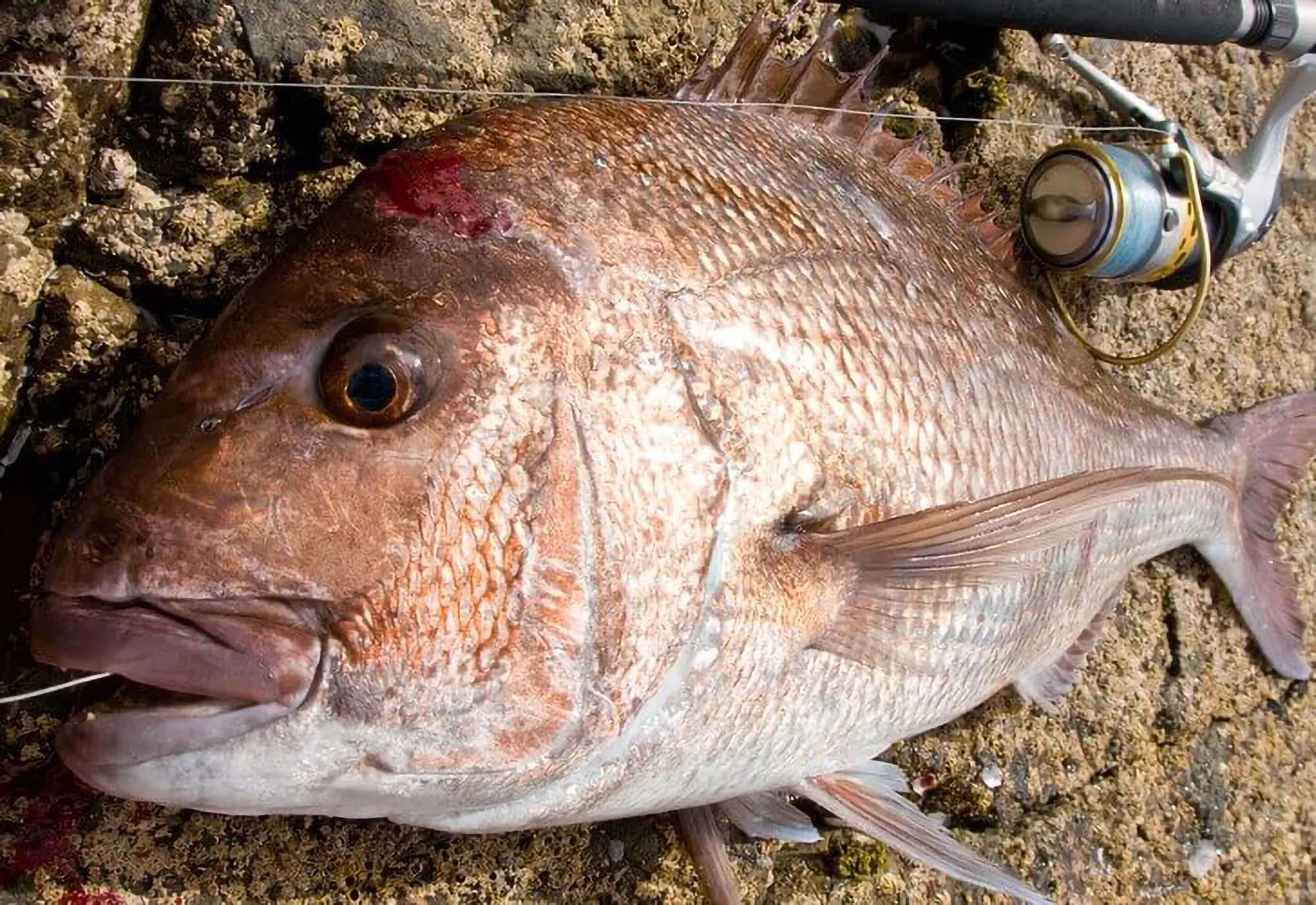
From the late 70s when we'd eat free while on surfing trips around the Top End, to the Labour Weekend when I scored two twin snapper of 5kg, filled the limit bag with seven fat 3kg fish and snagged a giant John dory, I've concentrated on the rock fishing, surfcasting and small-boat fishing that is accessible to all.
Ahipara
The surf dictates things here. It's one of the rare spots on the west coast where a sou'westerly is an offshore. So swell, plus that wind, means surfers galore descend on the place, and it was during my time surfing the consecutive point breaks there that I learned they also held fish galore, as well as crays, mussels and pāua.
Drive around from the south end of Ninety Mile Beach, across the rock ledges and the sandy beaches between, and pick your spot. The first long ledge is known by surfers as Peaks, then come Mukerau One and Mukerau Two, and so on into a remote wilderness.
Best fishing is February to April, when migrating snapper come close in (as in one to two metres of water) to feed up after spawning. But it returns fish all year round. In other months you need to get up early and be prepared to miss out and return next day in order to score.
Shellfish is the best bait; mussels or tuatua tied on with bait elastic. The wash will tear pilchards off very quickly. You need tough baits but not squid. Think like a fish; these locals don't have squid on their regular menu.
The very best bait is fresh-caught mullet and piper. A drag through the surf in the calm of the last couple of hundred metres of the beach with a bait net will quickly secure more than enough for bait, as well as a few smokers.
Best rule with the rig is to avoid sinkers as much as possible. This is a generality for the Far North, bar the surfcasting. At times, a fresh-caught piper or an elongated strip of mullet with three J-type or 'suicide' hooks in the 3/0 to 4/0 range threaded through it will attract immediate interest.
Heads up: A rāhui is currently in place around Tauroa Peninsula prohibiting the take of pāua from Te Huahua (Iron Gate) to Honuhonu. Respect it.

Ninety Mile Beach
There are just two places in the run of the beach where rocky outcrops offer some opportunity of not wading if you want a fish here. The first is The Bluff. It is an extremely dangerous place to fish when high surf is running, and more than one soul has met his end here. But it is as thrilling a place as you'll get to fish in terms of returns when it's on.
The rocky island that juts out from a sandbar that connects it to the island at low tide plays host to huge trevally that provide anglers with adrenaline-rushing runs. Trouble is, they know that the swirling bull kelp is the place to head for to lead the line into tangles and rocks. More are lost than landed.
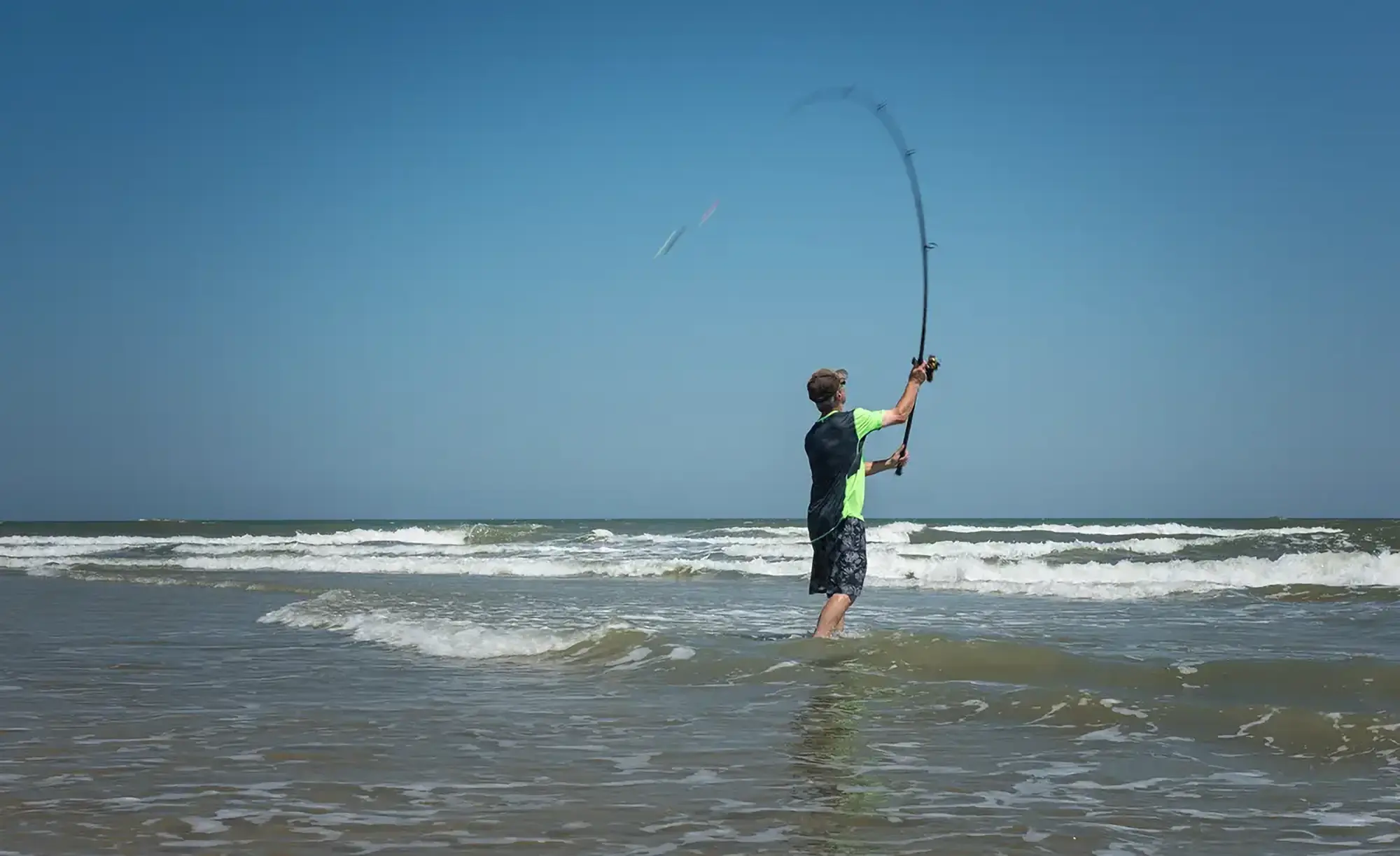
Essential rig is a 3m-plus surfcasting rod to aid lifting the fish clear of its cut-off target, and at least 15kg line, with a short trace of 60lb mono or fluorocarbon. Shellfish is best bait, tied on with bait elastic. Both J and circle hooks will work, but if you use the latter, ensure the gape of the hook is not filled with bait or you may not hook up.
The second bit of rock is Scott Point, right at the end of the beach. It remains fishable in howling easterlies when the east coast and most of the west are not. Just north of it is Twilight Beach, a real NZ gem.
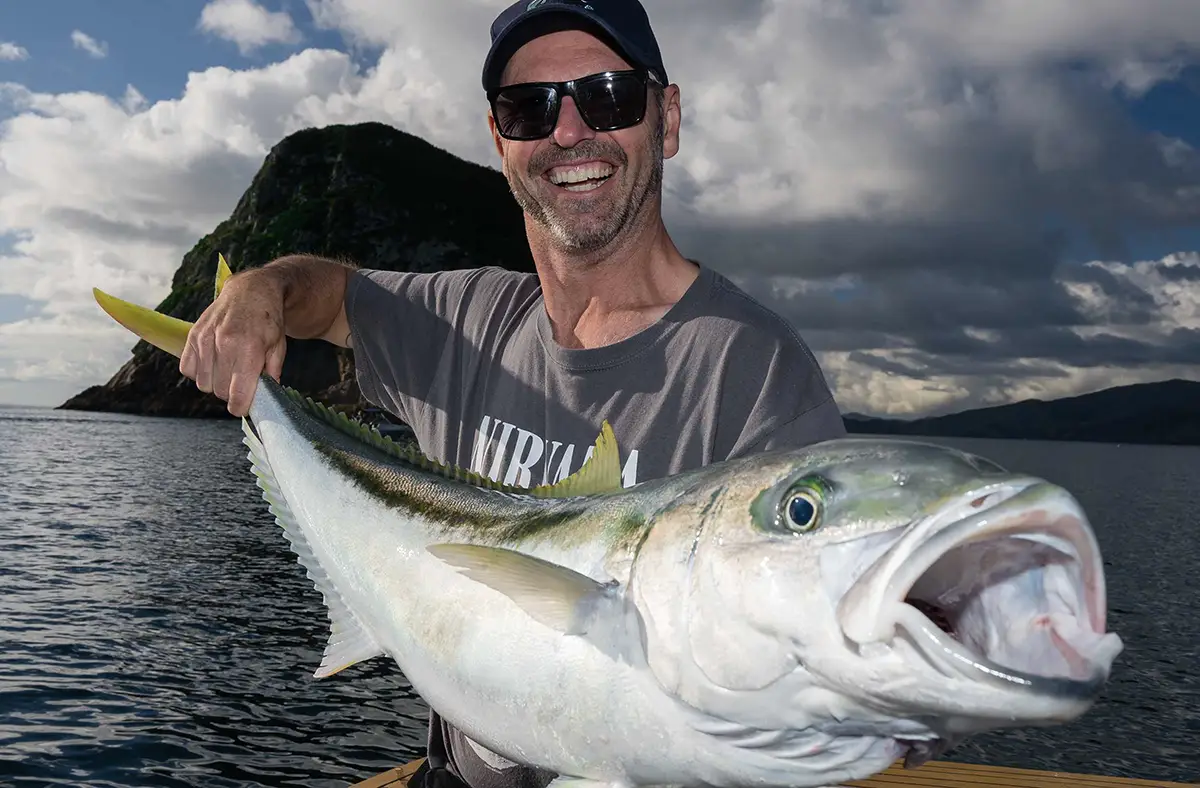
Black-and-white sand dunes run down to the water's edge and the beach drops away steeply, providing perfect surfcasting conditions. It requires a long walk to get here, and so the fishing is magic. As is the case with Cape Maria van Diemen. It's around 4km of hard slog to the best fishing spots, but well worth it if you land one of the 20-40kg kingfish this place is known for.
In terms of beautiful land-based fishing outlooks, the Far North is hard to beat.
Top End
There are just two places in the run of the beach where rocky outcrops offer some opportunity of not wading if you want a fish here. The first is The Bluff. It is an extremely dangerous place to fish when high surf is running and more than one soul has met his end here. But it is as thrilling a place as you’ll get to fish in terms of returns when it’s on.
The rocky island that juts out from a sandbar that connects it to the island at low tide plays host to huge trevally that provide anglers with adrenaline-rushing runs. Trouble is, they know that the swirling bull kelp is the place to head for to lead the line into tangles and rocks. More are lost than landed.
Essential rig is a 3m-plus surfcasting rod to aid lifting the fish clear of its cut-off target and at least 15kg line, with a short trace of 60lb mono or fluorocarbon. Shellfish is best bait, tied on with bait elastic. Both J and circle hooks will work but if you use the latter, ensure the gape of the hook is not filled with bait or you may not hook up.
The second bit of rock is Scott Point right at the end of the beach. It remains fishable in howling easterlies when the east coast and most of the west are not. Just north of it is Twilight Beach, a real NZ gem.
Black-and-white sand dunes run down to the water’s edge and the beach drops away steeply, providing perfect surfcasting conditions. It requires a long walk to get here and so the fishing is magic. As is the case with Cape Maria van Diemen. It is around 4km of hard slog to the best fishing spots but well worth it if you land one of the 20-40kg kingfish this place is known for.

Tapotupotu
The rocky outcrops at both ends of the beach are great snapper spots, and you may also be treated to schooling kahawai, which means the kingfish are there too in search of a feed. Net piper in the shallow and warm water in the sheltered ends of the beach during the day, then use them to attract table food in the evening and at dawn. A bait net costs bugger all and will be one of the best fishing investments you'll make.
The same applies to Rarawa Beach just to the south, where a stream that slides out the south of the beach attracts snapper and trevally as food is provided by the out-rush of an outgoing tide of brackish water.
Gather shellfish on the beach at low tide and use them at high, when the snaps come in to eat what you're offering.
Rangaunu Harbour and surrounds
Both the north and south entrances to the harbour offer excellent fishing as cruisers come in on the incoming and outgoing tide. Kahawai and kingfish are abundant, but you'll also hook sharks and stingrays, depending on your preference.
As with much of Northland, fishing is best at change of light, morning and evening, although here this can be adjusted by tide. A current running out in the middle of the day can be very good, but not so much a current running in.
Puheke, just south of the harbour, is a top spot for consistently producing a feed of snapper in the 40-50cm range. Dusk on a rising tide is best.
Rig: At the harbour entrance, big weights are needed either side, with long traces up to 3m the go. Also, use tough and small baits. Fresh jack mackerel or piper is the go, otherwise buy some fresh mullet. At Puheke, use a two or three-hooked whole piper or pilchard with no weight on an arm's length trace, cast from the rocks. A bait that floats briefly then sinks slowly is a killer here.
Tokerau Beach
This is a bonanza for surfcasters, kite and kontiki fishermen. The snapper move in en masse as the tide comes in to feed on the shellfish beds that stretch the length of the beach. Gather them at low tide and use at the high, or just take the tuatua home to eat (within current daily limits).
There is also a snapper bonanza for the boaties who sit just beyond the surf line, but you must be there prior to change of light or remain after it to nail the better snapper up to 3kg and occasionally more.
Rig: A long trace in the surf wash is the go, but it doesn't need to be as heavy as that you would use on the west.
At the south end of this beach is one of my all-time favourite spots, around Puketu Island, where the rock of the island forces the estuary run-out from an extensive lagoon to run parallel to the beach for around 200m, coursing around a multitude of mussel-covered rocky lumps that will tear the bottom out of a fibreglass boat or rip an inflatable's pontoon in one lift and dump from a seventh wave. Hence the competition will be from those locals fishing from battered tinnies.
Fairway Reef
Berley helps plenty. Limit bags on snapper can be had very quickly. But this place offers more; you can target John dory on small livebaits caught by sabiki, and set a larger jack mackerel or a kahawai out for big kingies.
I've had one that took 20 minutes to bring to the boat and another that towed us (in an inflatable) about a kilometre from the reef then back to it again to find a craggy rock edge on which to cut the 24kg line, which it did.
Taipa to Mangonui
Both ends of the beach are good, attracting cruising snapper and kingies in the XS size. At the north end, walk over the hill then drop down onto rocky crags at an unnamed jut-out that locals know as 'kahawai point', because if you fish there you will not go home without a feed of that species.
A livie on a balloon will often score, but this technique is even more effective at the south end, just outside the estuary mouth. Sit mid-channel in a dinghy and you're in with a chance of a kingfish up to 25kg.
I've seen two landed there and many more bust-offs by fish of that size, and caught plenty in the 15-20kg range myself. This is also a good trevally spot, but you need to use small hooks, as the bigger snapper hooked will rip their lip out. It also turns up multitudes of pannie snapper and the odd fish of 5kg.
Rig: 15kg on a long rod if you're fishing from the shore, with a one-and-a-half metre trace of tougher line, and a two-hook rig threaded into a pilchard. Cast and retrieve, letting the pillie sink, but once it hits the bottom, if it hasn't been taken by a kahawai on the way down or a trev or snapper when it hits the bottom, wind back in jerks; three or four turns and a stop, another three or four turns and a stop.
The Mangonui wharf provides an excellent base from which to score fresh baits, and while you're getting them, put one back down as a livie and score John dory, which are often there in numbers. The kingie fishing from the wharf is legendary, but I refer to it as 'combat fishing'.
When the kings are running, it's shoulder-to-shoulder, and way more fish are lost due to tangles and cut-offs on the barnacle-encrusted piles than are landed.
Berghan Point to Whangaroa Harbour
Most of this land is in private or Māori communal ownership, so it's hard to get to, which makes it one of the best places in New Zealand to fish. Make friends, use contacts and fish this coast if you can. It produces XOS snapper by the multitude.
Again, the rocky volcanic hull-ripping rocks deter the boaties, and so that, combined with the isolation, allows local 'mooching' snapper residents to grow to trophy size. There are numerous rock ledges that jut off the headlands. The coarse white sand and boulder beaches fish well too.
Best time is dusk and dawn, as with many fishing spots. Ultimate is a high tide at around 8-9am, so the change of light coincides with the water rise, which makes more food (e.g. shellfish and kina) available to the hungry cruising schools.
Current rules and closures (verify before you fish)
The following is a summary at the time of publication, not a substitute for checking the official source on the day.
Snapper
- East coast (SNA1, Cape Reinga south, including Tapotupotu, Rangaunu, Tokerau, Fairway Reef, Taipa, Mangonui, Berghan, Whangaroa): 7 fish per day, 30cm minimum.
- West coast (SNA8, including Ahipara and Ninety Mile Beach): 10 fish per day, 27cm minimum.
- The Top End straddles the boundary; know which coast you're on.
Combined finfish bag
- 20 finfish per person per day across the Auckland/Kermadec area (which covers all of Northland), within individual species limits.
Active closures and rāhui relevant to spots in this guide
- Tauroa pāua rāhui (Ahipara): No take of pāua from Te Huahua (Iron Gate) to Honuhonu, around Tauroa Peninsula. Put in place by local hapū in late 2025.
- Spiny rock lobster closure (east coast): From 1 April 2026, no take or possession of spiny rock lobster between Pārengarenga Harbour and Cape Rodney. This affects every east coast spot in this guide.
- Scallops (SCA1): All of Northland's scallop fishery from Ahipara around to Cape Rodney remains closed.
Where to check before you go
- MPI Auckland and Kermadec area fishing rules: https://www.mpi.govt.nz/fishing-aquaculture/recreational-fishing/fishing-rules/auckland-kermadec-fishing-rules
- General fishing rules portal: https://www.mpi.govt.nz/fishing-aquaculture/recreational-fishing/fishing-rules
- NZ Fishing Rules app (iOS and Android): offline rules and closure layers, useful when there's no signal at the ramp
- Text "snapper" (or species name) to 9889 for an instant SMS reply with size and bag limits in your area
Rāhui and customary closures
Rāhui placed by tangata whenua are an exercise of kaitiakitanga over a fishery under stress. Some are voluntary; others are given statutory backing under section 186A of the Fisheries Act 1996, in which case fishery officers can enforce them with the same penalties as any other closure. Either way, the recreational sector's continued access to this coast is bound up with respectful coexistence with iwi management. If a rāhui is in place, observe it.
Disclaimer
The information in this guide reflects the writer's experience over many years of fishing the Far North. Conditions, access and regulations all change. It is the angler's responsibility to verify current rules, including bag and size limits, area closures, set net restrictions, and rāhui or other customary closures, before fishing any of the locations described. Angler's Planet and the contributing writer accept no liability for any consequences arising from reliance on this guide. Fish safe; check the surf, the tide, and the rules before you go.